
By Dr. Andrea Allen
This is the first post in a series exploring how 3D printing can transform wildlife forensic science and conservation education. Each installment will follow my ongoing effort to recreate trafficked wildlife products as educational models and tools for investigation training.
This past March, I had the opportunity to attend Community Week at the Wildlife Forensic Academy (WFA) in Buffelsfontein Nature Reserve, an hour outside of Cape Town, South Africa. The event brought practitioners, educators, and conservationists together to share ideas, explore partnerships, and see the Academy’s innovative training up close.
I first met the WFA team at a wildlife CSI training hosted at the Hapeville Police Department, near the Atlanta airport, in December 2024. Seeing their dedication to training rangers, students, and professionals in wildlife forensics left a lasting impression on me; I was genuinely in awe of what they do. My enthusiasm for their work and interest in bringing my own students to the Academy for study abroad sparked their invitation for me to join Community Week.


Visiting the Academy in person was unforgettable. Their facility is unlike anything I’ve ever seen—an 800-square-meter training space set within a private game reserve, complete with live vegetation, trees, and taxidermied species like rhino, elephant, and giraffe. It includes realistic investigative spaces such as a mock poacher’s house, shipping container used for smuggling simulations, and poacher’s vehicle. It’s a fully immersive environment designed to replicate authentic wildlife crime scenes from the field to the courtroom.


On the opening day, Andro Vos, CEO and Founder of the WFA, introduced the vision behind it all. He spoke about “why the Academy?”—how it began as a dream to merge forensic science and wildlife conservation into one integrated learning space—and how it became reality. As I’ve said before, and will keep saying: the idea for the Academy is truly ingenious—it was hiding in plain sight.

Later, Simone Louw from the organization TRAFFIC shared a sobering presentation on wildlife trafficking—from fish maws and dried seahorses to shark fins.

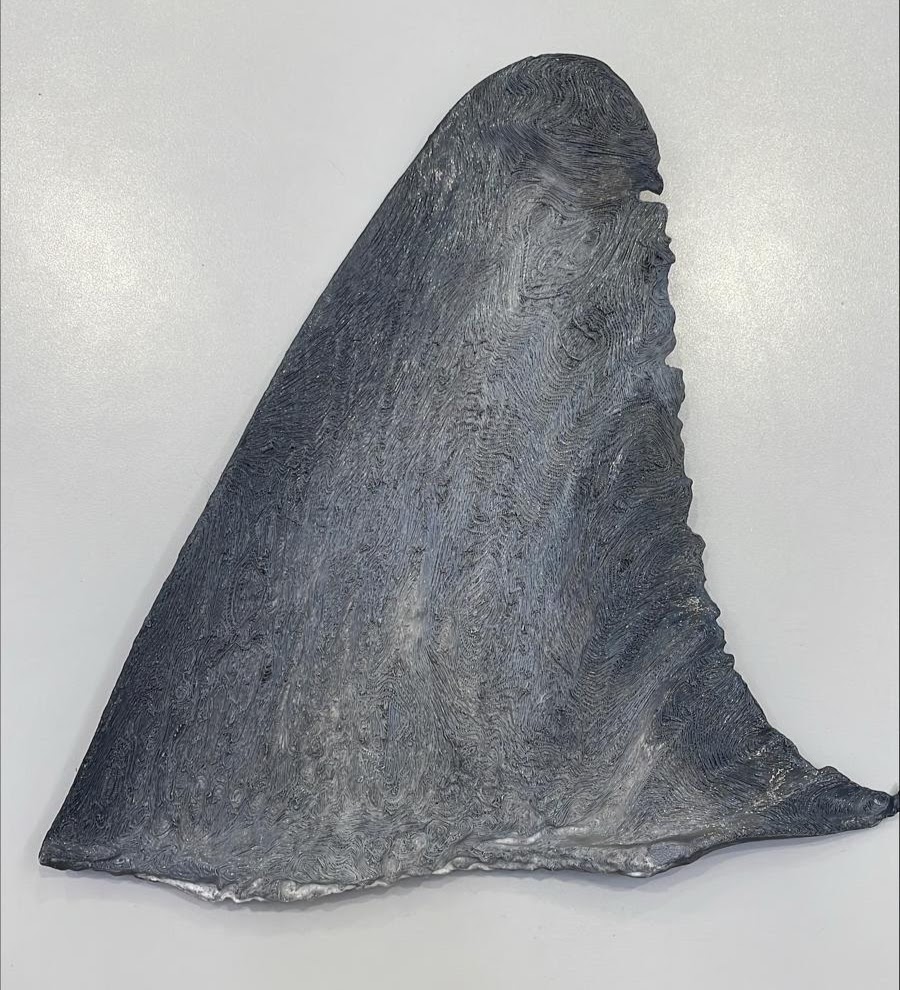
What truly fascinated me was TRAFFIC’s 3D-printed shark fin project. To help officials distinguish between different—and often endangered—shark species in trade, TRAFFIC created highly realistic 3D printed shark fins based on scans from real specimens. The goal: empower enforcement officials worldwide to identify protected species with confidence and accuracy, strengthening efforts to fight the illegal shark fin trade that threatens millions of sharks every year.
That presentation became the catalyst for my own project, one that would eventually evolve into a full 3D‑printed fin collection—and so much more.
Returning home, I couldn’t stop thinking about how this blend of art, science, and technology could support wildlife investigations—and how it could also draw in faculty from across campus, inspiring collaboration between disciplines from criminal justice and biology to art, computer science, and beyond. I pitched the idea to my Dean, Dr. Dwayne Hooks, at Clayton State University, and soon after, a Creality K Plus 3D printer arrived in my office.
Printing My First Fin
At first, the printer sat on my floor—a mystery in a box—waiting on someone to come set it up for me. I commented to my colleague and Co‑Lead of the Laker Wildlife Initiative, Dr. Josh Meddaugh, “Why did he buy me this? I don’t even know how to use one!”
After a few weeks, I grew impatient. One afternoon, I started ripping open the box and unpacking it. To my surprise, the setup was shockingly easy. Piece by piece, it came together until the machine finally stood ready, quietly promising endless possibility. I leaned on AI to guide me through everything—from understanding filaments and slicer settings (the software that converts 3D models into printable instructions) to deciphering file formats and platform calibration. Step by step, I moved from confused to confident.


Once I had a sense of how everything worked, I loaded the TRAFFIC shark fin file—the same one that had inspired me months earlier in South Africa. Watching the printer’s nozzle glide back and forth, building the fin layer by layer, was mesmerizing. The machine even created delicate branching supports—what I learned are called “trees”—to hold portions of the fin in place as it grew upward from the build plate. Hours later, I held the finished piece in my hands: a crisp white fin that felt both technical and symbolic—my first step in bridging classroom learning, conservation, and global collaboration.

That initial print became more than just a project; it became a spark. Professor Alan Xie hand-painted it to meet TRAFFIC’s color and texture standards, transforming it from raw filament into a lifelike teaching tool. During our recent “Where Forensics Meets the Wild” summit, I presented it to my partners from the Wildlife Forensic Academy, who took it back to South Africa for use in their forensic training programs—bringing my first 3D‑printed fin full circle, from inspiration to creation to application.


What Comes Next
This was just the start. My journey from curiosity to creation reminded me how technology, creativity, and collaboration can build something far greater than the sum of its layers. I plan to add more 3D‑printed wildlife models to this project—exploring new species, explaining why each was chosen, and how they can be used in training officers, students, and forensic scientists alike. Each print will have its own purpose and story, whether it’s helping identify trafficked shark fins, demonstrating skeletal features, or supporting conservation education through tactile, visual learning. For now, I’m just proud that what started as an unopened box in my office has become something real—something that, soon, will help others learn how to protect the world’s wildlife.

Leave a Reply