
By Dr. Andrea Allen
This series began with a single 3D printer and a lot of questions. Along the way, the focus has turned from wildlife forensics, like printing TRAFFIC’s shark fin replicas, to developing field kits that help distinguish animal from human remains, and then to creating curated 3D collections to support real decisions in real places. Part 6 explored how those libraries can be designed for specific contexts—Georgia vs. South Africa, patrol officer vs. customs agent—rather than trying to print everything for everyone. This final installment looks outward: how these same tools and habits of mind can broaden into new applications and new forms of collaboration, while staying rooted in wildlife and forensic work.
From Images on Screens to Tools in Hands
Regional 3D libraries are, in many ways, a response to a gap between what exists in theory and what people can use in practice. Digital platforms like OsteoID, museum collections, and teaching skeletons provide deep, carefully validated information. They are indispensable for specialists. Yet for a ranger in the field, a border agent examining luggage under pressure, or a student at the start of their training, pages of measurements or 2D screenshots will only go so far. What makes a difference is being able to hold a bone, turn it in the light, and compare it directly to the unknown object in front of them. In that moment, one can notice its size, shape, and distinctive features, building a clearer understanding of its characteristics and how well it matches the specimen they are trying to identify.
The same logic applies beyond bones. Once a workflow exists for moving from a 3D scan, to curated file, to printed model, it becomes possible to think about other forms of evidence and other questions: how processed wildlife products differ in texture and shape from legal look‑alikes, how wounds and tools relate in three dimensions, or how multiple partial remains fit together in a grave or dump site. The underlying principle is simple but powerful: 3D printing is most helpful when it is tightly linked to the decisions people actually need to make, not just to the technology itself.


New Projects on the Horizon
The next phase of work grows out of that principle. On the wildlife and forensic side, there is room to deepen and diversify the regional libraries introduced in Part 6. That includes:
- Expanded bone sets for high-risk zones (e.g., human-wildlife borders), including species that are under‑represented or missing in existing 3D scan collections, and mixed human/non‑human kits to train rapid sorting and decision‑making.
- 3D flora models for plant poaching and trafficking forensics, extending to conservation education.
At the same time, some of the most exciting new projects sit at the edge of this core work. Skills developed for scanning and printing wildlife artifacts can also support other kinds of design and care. One emerging example involves adapting 3D printed mobility equipment for children in hospital settings, in collaboration with a partner organization working in southern Africa. The details of that work are still in progress and will need their own space and time, but they are a reminder that the tools of 3D printing are not confined to one domain.
Collaboration as the Throughline
Across all of these projects, collaboration matters more than hardware. None of this work happens in isolation. Regional 3D libraries depend on input from field rangers, customs officials, forensic labs, and museums that know which cases appear again and again. Teaching skeletons and mixed‑scene kits benefit from feedback by students and instructors about what feels realistic, what confuses them, and what helps concepts “click.” Assistive devices for children rely on clinicians, families, and local partners to define what is truly useful and sustainable.


In that sense, 3D printing is not the story; it is the connective tissue that links people, data, and practice. A scan taken in one place can be shared, refined, and printed somewhere else. A model developed in a university setting can travel to a training academy, a border post, or a small clinic. As more institutions and communities adopt these tools, the emphasis shifts from one person’s 3D printer to a shared ecosystem of designs, protocols, and ethical commitments. In many ways, that ecosystem reflects an ubuntu understanding that the well‑being of people, wildlife, and places is intertwined.
Looking Forward Without Closing the Door
Ending this series at Part 7 does not mean the story is finished. It simply marks a pause: a point where the initial journey—from curiosity, to first prints, to wildlife forensics applications, to regional libraries and beyond—has reached a natural resting place. There is still much to learn, test, and revise.
What comes next will likely be less linear than this series—more branching paths than numbered posts. Some of those paths will stay close to wildlife forensics: refining bone kits, building better teaching collections, and helping first responders make faster, more confident identifications. Others may move further into adjacent worlds: assistive devices, community education, or unexpected collaborations that arise when people realize what is possible with a scanner, a printer, and a shared commitment to justice and care.
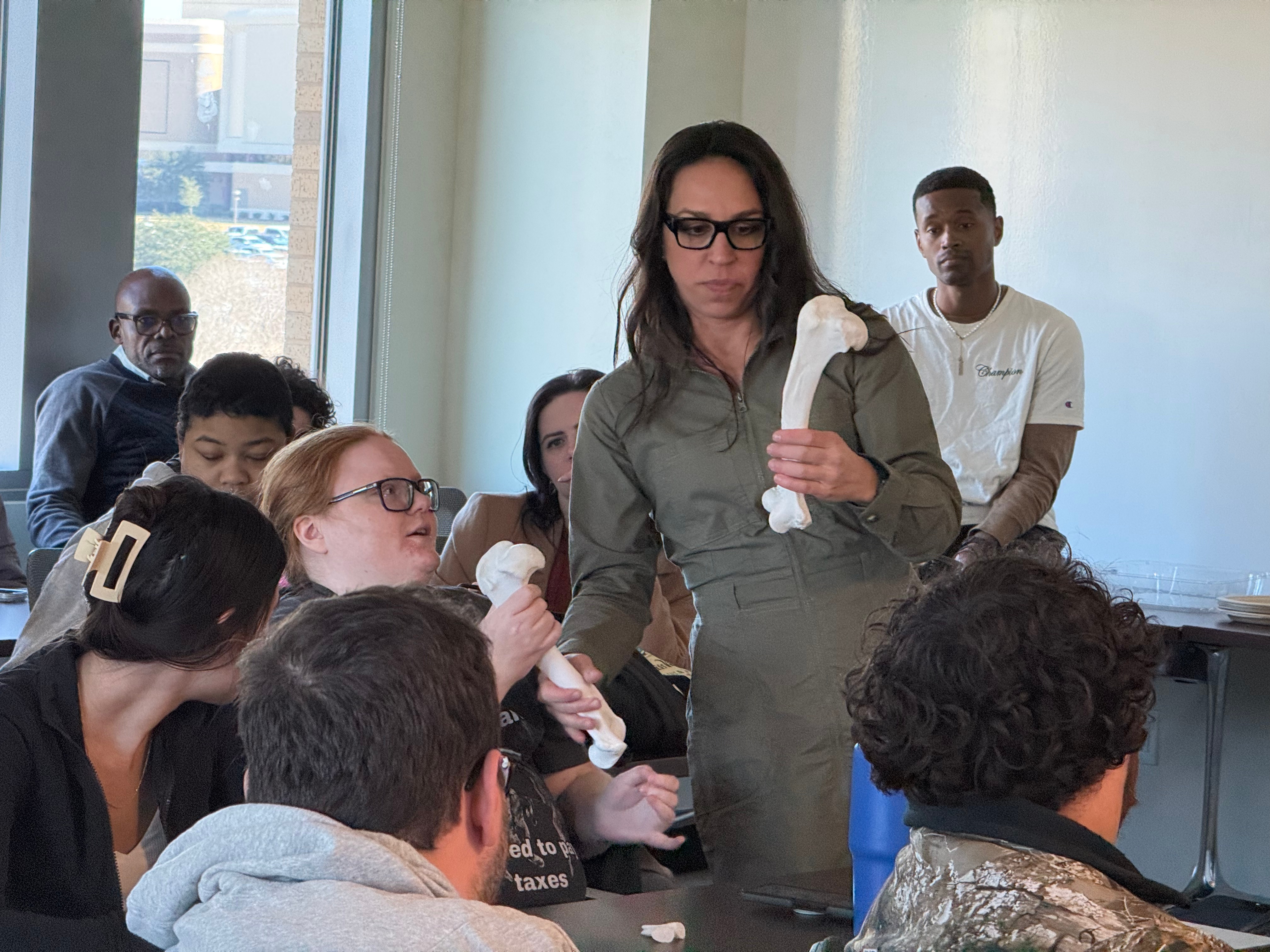
Recently, this journey also sparked an invited talk at Texas A&M University, “When Wildlife and CSI Collide: Animal Bones, Human Forensics, and 3D Innovation.” There I had the chance to share these ideas with new partners and students. I am grateful to Dr. Kevin Njabo for the invitation and for the reminder that experiments begun with a single 3D printer can grow into conversations and collaborations far beyond their starting point.


For now, the hope is simple: if these posts have sparked even one new idea about how 3D printing can support wildlife conservation, forensic science, or human wellbeing, then the journey from curiosity to creation has been worth taking—and is only just beginning.
Leave a Reply